A professional office cleanout service can help when clutter blocks work, creates safety risks, or delays a move. It can remove desks, cubicles, electronics, appliances, and other unwanted items. For businesses in York, the right crew can sort the load, move bulky pieces, and leave the space ready for its next use.
Table of Contents
- What Are the Signs Your Office Needs a Professional Cleanout?
- When Does Office Clutter Become a Business Problem?
- Should You Hire Professionals for an Office Move or Renovation?
- How Can a Professional Office Cleanout Service Handle Electronics?
- Is Your Office Cleanout Too Large for Employees to Manage?
- How Much Does a Professional Office Cleanout Service Cost?
- How Should You Choose the Right Office Cleanout Service?
- Key Takeaways
- Frequently Asked Questions
- Conclusion
What Are the Signs Your Office Needs a Professional Cleanout?
A workplace may need a professional cleanout when old items take over useful space. Clutter can make work harder, slow visitors, and create trip risks. A small pile in one corner can grow into a much bigger problem over time.
Clutter Is Affecting Productivity and Workplace Safety
Employees can work better when they have clear paths. Boxes in halls, loose cords, and stacked furniture can cause falls. They may also block doors or emergency exits. Crowded work areas can make cleaning harder too.
Clutter may hide floor damage, leaks, or pests. It can also block vents, panels, and other areas that need service. These signs show that office cleanouts should not wait much longer.
A cleanout can remove items that no longer help the business. This may include broken chairs, old file cabinets, unused supplies, and damaged fixtures. Business owners and property managers should act when clutter affects safe access or normal work.
Unused Furniture and Equipment Are Taking Over Valuable Space
Unused desks and cubicles often stay because nobody has time to move them. Old printers, monitors, and appliances can fill storage rooms. When these items stay too long, the business loses space for staff, meetings, stock, or a new tenant.
Common signs include blocked storage areas and crowded reception spaces. Some rooms may be used only to hold unwanted items. A professional office cleanout service can review the load and plan removal in a safe order.
York Junk Removal can help York businesses decide what to remove, reuse, donate, or send through proper disposal channels. A clear plan can help the business regain space without asking staff to handle every heavy item.
When Does Office Clutter Become a Business Problem?
Office clutter becomes a business problem when it affects people, access, work, or the property. It is not only an appearance issue. A crowded workplace can delay repairs, upset visitors, and add work for employees who were not hired to haul heavy items.
How Excess Items Affect Employees, Visitors, and Daily Operations
Too much junk can make simple tasks take longer. Staff may walk around boxes or search through old supplies. Visitors may have trouble finding clear paths, meeting rooms, or service areas. In a shared building, clutter can also make the property seem poorly managed.
Old furniture can limit room layouts. It may stop a business from using all its space. It can also block electrical panels, vents, doors, or service areas. Property managers should keep these points clear for repairs and inspections.
Clutter may affect the workday in other ways. Staff can lose time moving items from one place to another. Meetings may need to move because a room is full. A cleanout can help return those rooms to useful work.
Why Storing Unwanted Office Items Can Create Liability Concerns
Heavy items may tip. Sharp edges may cause cuts. Unstable stacks may fall. Electronic waste may also contain parts that need special handling. The rules can depend on the item and local needs, so businesses should not place every object in a regular dumpster.
Employees should not move large desks, appliances, or packed rooms without proper tools. A commercial cleanout team can help lower that risk. York Junk Removal serves commercial customers who need office junk removal, business hauling, and property cleanups across the main York area.
Should You Hire Professionals for an Office Move or Renovation?
Professional help can be useful before an office move, remodel, or renovation. Removing unwanted items first gives contractors more room to work. It also keeps a business from moving old furniture from one space to another without a clear reason.
Removing Desks, Cubicles, and Fixtures Before Work Begins
Desks and cubicles can be heavy and hard to move through doors. Some must be taken apart before removal. File cabinets, shelves, conference tables, and reception counters can create the same problem.
A cleanout plan should consider elevators, stairs, loading areas, door widths, and building rules. The crew may work in stages so part of the office stays open. This can reduce disruption while clearing areas needed for repairs.
Businesses may also need to remove old carpet, shelving, display pieces, or safe construction debris. The service should confirm which materials it accepts before work begins. Paint, chemicals, medical waste, and other restricted items may need another provider.
Preparing the Space for a New Tenant or Business Use
A vacant office should be open and ready for inspection. Leftover furniture can make a room look smaller. It can also slow painting, repairs, showings, or new floor plans.
The same need can arise after a business closes or changes locations. A planned cleanout can separate reusable items from broken junk. It can also help document what left the property before the next tenant takes control.
This is one reason property owners may plan office cleanouts early. The work can be set around inspections, repairs, and move dates. Early planning also gives the crew time to review building access.
How Can a Professional Office Cleanout Service Handle Electronics?
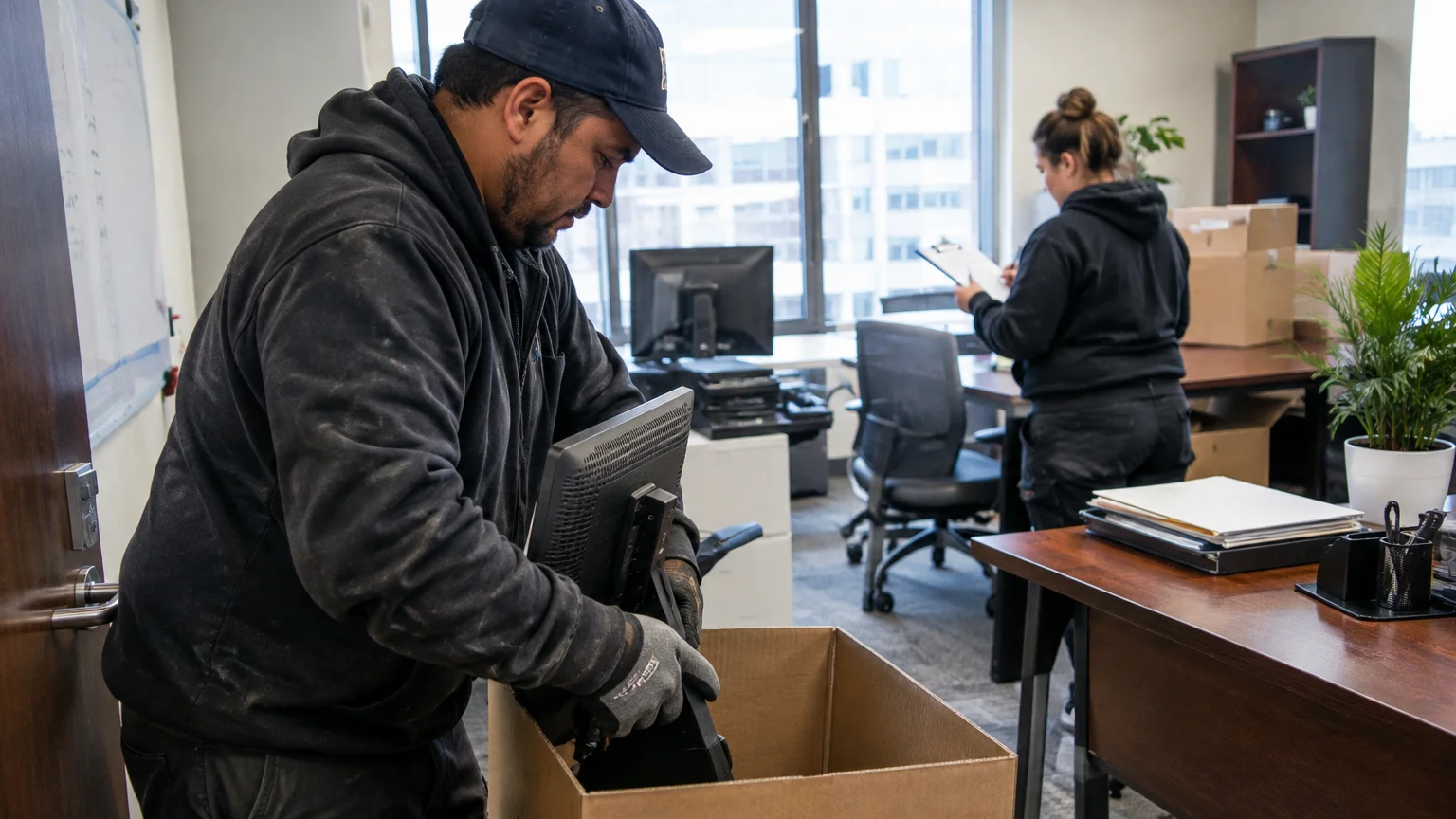
A professional office cleanout service can sort computers, monitors, printers, phones, appliances, and other electronic waste. Electronic waste, or e-waste, means unwanted equipment with electronic parts. It should not always be mixed with common trash.
Identifying Computers, Monitors, Printers, and Other Electronic Waste
Office electronics may include desktop computers, laptops, screens, printers, scanners, routers, shredders, and small appliances. Some may still work and could be reused. Others may be old, damaged, or missing parts.
Businesses should remove private files before equipment leaves the building. They should also ask their technology team about data safety. A cleanout crew moves the physical items, but the business must protect private information.
Old hard drives may need secure data destruction from a qualified provider. This step should happen before the equipment is handed over for removal. Staff should not assume that moving a computer removes the data stored on it.
The same care applies to refrigerators, microwaves, and other break-room appliances. People often ask how to get rid of a fridge or dispose of appliances. The answer depends on the item, its condition, and local rules. A removal company can explain which items it accepts and which may need another facility.
Why Responsible Sorting and Disposal Matter for Businesses
Sorting keeps reusable, recyclable, restricted, and ordinary junk apart. It can also stop unsafe items from entering a regular waste stream. Businesses should ask how the provider handles electronics and whether the crew follows local requirements.
Responsible removal helps protect workers, building occupants, and the environment. It can also give the business a clearer record of what left the property. York Junk Removal can help offices plan a cleanout that includes furniture, equipment, and general commercial debris.
Is Your Office Cleanout Too Large for Employees to Manage?
An office cleanout may be too large for employees when it covers many rooms, bulky furniture, tight access, or a short deadline. The work involves more than carrying items to a curb. It may include sorting, taking items apart, lifting, loading, and final cleanup.
The Time and Labor Involved in Handling Bulky Commercial Items
A single desk may seem easy to move. A full office can hold many large items. Cubicle panels can be awkward to carry. File cabinets can remain heavy even when empty. Tables, shelves, appliances, and boxes can fill a loading area quickly.
Employees may lose work time while moving these items. They may not have tools to take furniture apart. They may also lack ways to protect walls, floors, and doors. Asking staff to handle heavy loads can lead to injuries or property damage.
A commercial cleanout service can plan the work around the business schedule. The crew can check access limits, set a removal order, and keep the project moving. This helps offices that must reopen or turn over space soon.
When Specialized Equipment and Coordinated Hauling Are Necessary
Large cleanouts may need dollies, lifting tools, protective materials, trucks, and several workers. A coordinated team can move items through shared buildings with less confusion. It can also keep halls, elevators, and loading zones clearer during the project.
Property managers should check building rules before scheduling removal. Some buildings require reserved elevators, proof of insurance, or set loading times. Sharing these details early helps the provider make a safer plan.
How Much Does a Professional Office Cleanout Service Cost?
The cost of a professional office cleanout service depends on the material, access, labor, disposal needs, and timing. A small pickup of loose items is usually simpler than a full office teardown. The final cost should be confirmed in a written quote after the job details are reviewed.
What Affects the Cost of Furniture, Equipment, and Debris Removal
Furniture size and quantity are major factors. A few chairs and boxes need less work than cubicles, tables, file cabinets, and appliances. Stairs, long halls, limited parking, and elevator rules can add time and labor.
The material type matters too. Electronics, appliances, construction debris, and restricted items may need different handling. Businesses should describe the load clearly and share photos when asked. This helps the provider understand the work before scheduling.
Urgent deadlines can affect planning because the crew may need to fit the job into a narrow time window. Large commercial jobs may also need more workers or more than one hauling trip. Each provider sets its own rates, so businesses should compare the work plan and included services.
How a Commercial Cleanout Compares With Handling Items In-House
Handling a small cleanout in-house may work when the load is light and safe. Employees can sort papers, pack supplies, and move light objects. They do not always need professional help for simple tasks.
The job becomes harder when employees must sort, lift, take apart, transport, and dispose of everything. The business should also consider lost work time, injury risk, tools, and possible building damage.
A professional team may fit better when the office has heavy items, many rooms, or a firm deadline. The business should ask for a clear quote before work starts. It should also confirm accepted materials, cleanup steps, and building access needs.
How Should You Choose the Right Office Cleanout Service?
The right office cleanout service should have commercial experience, clear item rules, and a safe removal plan. Businesses should look for a provider that understands offices, shared buildings, property turnover, and bulky items. A short conversation can show whether the company fits the job.
Questions to Ask About Commercial Experience and Accepted Items
A business owner or property manager can ask:
- Has the company handled offices, stores, warehouses, or shared buildings?
- Does the crew remove desks, cubicles, electronics, appliances, and office junk?
- Which items are restricted or outside the service scope?
- How does the company protect walls, floors, elevators, and shared areas?
- Will the crew sort materials, or must the customer do that work?
- What details are needed to prepare the final quote?
The answers should be clear and specific. Businesses should not assume that every junk removal provider accepts every material. A written scope can prevent confusion on removal day.
What to Expect During Scheduling, Removal, and Site Cleanup
Scheduling usually starts with details about the building, load, access, and timing. Photos or an on-site review may help the provider understand the work. The business should mention stairs, elevators, loading rules, parking limits, and security needs.
During removal, the crew should work in an orderly way. It should keep paths as clear as possible. After loading, the team should collect loose debris caused by the removal. The final scope should state what cleanup is included.
York Junk Removal can help businesses and property managers across York plan office furniture removal and commercial cleanout services. The company can help review the load, access needs, and next steps before the work begins.
Key Takeaways
- Clutter becomes serious when it blocks access, slows work, or creates hazards.
- Professional help can make office moves, renovations, and tenant changes easier.
- Electronics and appliances need careful sorting and may need special handling.
- Large furniture removal can take staff away from their normal duties.
- A clear scope should cover items, access, cleanup, and the final quote.
Frequently Asked Questions
What is a cleanout service?
A cleanout service removes unwanted items from a home, office, store, or other property. Office work may include desks, chairs, cubicles, electronics, appliances, boxes, and general junk. The provider sorts and hauls accepted materials so the customer does not manage every heavy item alone.
This is different from professional house cleanouts in the type of work involved. Office projects often include shared halls, elevators, work equipment, and building rules. The plan should match the property and the items being removed.
How do businesses dispose of old office appliances?
Businesses should first check whether the provider accepts the appliance. Refrigerators, microwaves, and other equipment may need special handling. Staff should not leave appliances in a regular waste area without checking local rules.
A removal company can explain the next step for accepted items. If an item falls outside the service, the business may need a different disposal provider. Asking before removal can prevent delays.
What should a business do with old computers?
The business should protect private data before removing computers, drives, and other equipment. Its technology team or a qualified data service may need to erase or destroy stored information.
After that step, the business can ask a cleanout provider about accepted electronics. This is an important part of office cleanout FAQs because physical removal and data security are separate tasks.
Can employees handle a small office cleanout themselves?
Yes, employees may handle light items when the load is small and safe. They can sort papers, pack supplies, and move lightweight objects without special tools. Heavy desks, appliances, crowded rooms, and large electronics are better left to trained workers with suitable equipment.
A small job may not need a professional service. Staff should stop if an item is too heavy, unstable, sharp, or hard to move safely. Saving work time is not worth an injury or damaged property.
How far ahead should an office cleanout be scheduled?
Businesses should schedule as early as possible when a lease, move, renovation, or tenant change has a firm date. Early planning gives the provider time to review access, item types, building rules, and crew needs.
Short-notice work may still be possible, but availability depends on the schedule. Earlier contact also gives the business time to protect data, sort items, and tell building staff about the removal.
Conclusion
An office cleanout can help when clutter affects safety, productivity, space, or a business deadline. Professional help is useful for bulky furniture, electronics, appliances, and projects that cover several rooms. York Junk Removal helps businesses and property managers make clear removal plans for cleaner, more useful spaces.
If you need help deciding what should leave the property, Contact us today to plan your office cleanout with York Junk Removal.
If you are not sure what you are dealing with, it is worth having someone look at it before it turns into a bigger job. Get in touch with York Junk Removal today and we will tell you where you stand.