Professional large appliance removal is worth considering when an appliance is heavy, stuck, unsafe to move, or hard to dispose of. It can help with refrigerators, washers, dryers, stoves, and dishwashers. York Junk Removal helps property owners plan a safer pickup while following local disposal needs and protecting reusable materials.
Moving a large appliance may seem simple, but many jobs have hidden risks. A refrigerator may contain refrigerant. A washer may hold water. A built-in stove may connect to gas or electrical lines. The best choice depends on the appliance, the property, and the safest removal plan.
Table of Contents
- When Is a Large Appliance Too Heavy or Awkward to Move Safely?
- When Should You Hire Professionals for Refrigerator Removal?
- Why Is Professional Removal Worth It When You Have Multiple Appliances?
- When Does Appliance Removal Require Special Disposal or Recycling?
- Should You Hire Help When an Appliance Is Stuck or Built In?
- When Is Professional Appliance Removal Important for a Property Turnover?
- How Can You Decide Whether Professional Large Appliance Removal Is Worth It?
- Key Takeaways
- Frequently Asked Questions
- Conclusion
When Is a Large Appliance Too Heavy or Awkward to Move Safely?
A large appliance may be too risky to move when one person cannot control its weight, shape, or balance. Refrigerators, washers, dryers, and stoves can shift without warning. A safe move needs enough space, the right tools, and a clear path to the vehicle.
How appliance weight and design create lifting risks
Large appliances can be hard to grip. Their smooth sides give little hand support. Doors, cords, hoses, and loose parts can catch on walls. A tall refrigerator may tip at a threshold. A washer may hold water and become even harder to control.
Homeowners can handle some simple checks themselves. They can remove food, shelves, loose racks, and personal items. They can read the owner’s guide and clear the path. However, they should not strain to lift an appliance that needs more than one capable person.
Why stairs, narrow doorways, and uneven surfaces matter
Stairs create a major risk because the appliance must stay balanced at each step. Narrow doors may require careful turns. Wet floors, uneven driveways, and soft ground can make a dolly slip. A fall can hurt someone or damage flooring, trim, cabinets, or the appliance.
Professional large appliance removal is often sensible when the route has stairs, tight corners, long halls, or uneven ground. A removal crew can review the path before moving anything. This planning helps reduce rushed lifting and protects the home from avoidable damage.
When Should You Hire Professionals for Refrigerator Removal?
Professional help makes sense for refrigerator removal when the unit is heavy, leaking, connected to a water line, or ready for disposal. Refrigerators need more care than many household items. They have sealed cooling parts and may contain refrigerant.
What makes refrigerators different from other appliances
A refrigerator may have glass shelves, sharp metal edges, a water filter, an ice maker, and a compressor. Before moving one, the owner should remove food and loose shelves. A qualified person should shut off the water supply when the connection is difficult or unclear.
A homeowner can wipe the inside, unplug the unit, and secure the doors for a short move. The unit should not be dragged across the floor. It should stay upright as much as possible. If it must tilt, follow the maker’s instructions before plugging it in again.
How refrigerant and compressor parts affect disposal
Refrigerant is a substance used in cooling systems. It needs proper recovery before some appliances are processed. The compressor, coils, wires, metal shell, and plastic parts may also need different handling.
For this reason, an old refrigerator usually should not go into regular household trash. Local facilities may have rules for appliances with cooling systems. York Junk Removal can help York homeowners arrange refrigerator removal without asking them to handle sealed cooling parts. The team can identify the item and direct it toward a suitable disposal or recycling route.
Why Is Professional Removal Worth It When You Have Multiple Appliances?
Professional removal can help when a property has several large appliances waiting for pickup. Moving a refrigerator, washer, dryer, stove, and dishwasher one at a time can require tools, storage space, and several trips. One planned pickup may be easier to manage.
Coordinating refrigerator, washer, dryer, stove, and dishwasher removal
Each appliance may need a different first step. A washer may need its hoses drained. A dryer may need its vent disconnected. A dishwasher may sit under a counter and connect to water, power, or a drain. A stove may connect to gas or electricity and should not be pulled out by force.
Homeowners can remove loose items and clean surfaces themselves. Difficult utility connections should be left to a qualified professional. After the appliances are safe to move, a removal crew can load them in a planned order. This helps keep doors, halls, and loading areas clear.
How one scheduled pickup can simplify a property cleanout
Several appliances may appear during a kitchen update, rental turnover, estate cleanout, or garage project. They can block work areas and use needed storage space. A planned pickup lets the owner focus on repairs, cleaning, painting, or listing work.
A cleanout service removes unwanted items from a home or property and takes them to the proper next destination. Large appliances may be part of that work, along with other approved household items. York Junk Removal helps customers sort which items are ready for removal before the appointment.
When Does Appliance Removal Require Special Disposal or Recycling?
Appliance removal may need special handling when an item contains refrigerant, electronic parts, oils, batteries, or mixed materials. The right process depends on the appliance and local rules. Recycling may be possible, but the item must reach a facility ready to process it.
Which appliance materials and components may be recovered
Large appliances often contain steel, aluminum, copper, glass, plastic, wiring, and electronic parts. Some materials may be separated and sent for recycling. Reuse may also be possible when an appliance is clean, complete, and working.
Owners should not assume every part belongs in a curbside recycling bin. Curbside programs accept limited household materials. A large refrigerator or dishwasher usually needs a special drop-off or pickup plan. A removal provider can help sort the item by type and condition.
Why local disposal rules can affect the removal process
Rules can differ by city, county, facility, and appliance type. Some sites accept large appliances only during certain hours. Others may need proof that cooling equipment was handled correctly. Property owners should check local guidance when they plan to deliver an appliance themselves.
Professional large appliance removal can reduce this guesswork. The crew can review the item before loading it and follow the destination’s rules. York Junk Removal can help homeowners, landlords, and business owners prepare appliances for a suitable pickup route. The owner should share any leaks, damage, or utility connections before removal.
Should You Hire Help When an Appliance Is Stuck or Built In?
Professional help is often safer when an appliance is stuck, built in, or connected to utilities. Pulling too hard can damage cabinets, floors, walls, pipes, wires, or gas lines. A simple removal job can become a repair problem when the unit is forced out.
Removing connected or tightly fitted appliances safely
Built-in dishwashers often sit below a counter. Wall ovens may fit tightly inside cabinets. Cooktops can connect below the counter. Refrigerators may have water lines or custom trim. These items need careful checks before anyone tries to move them.
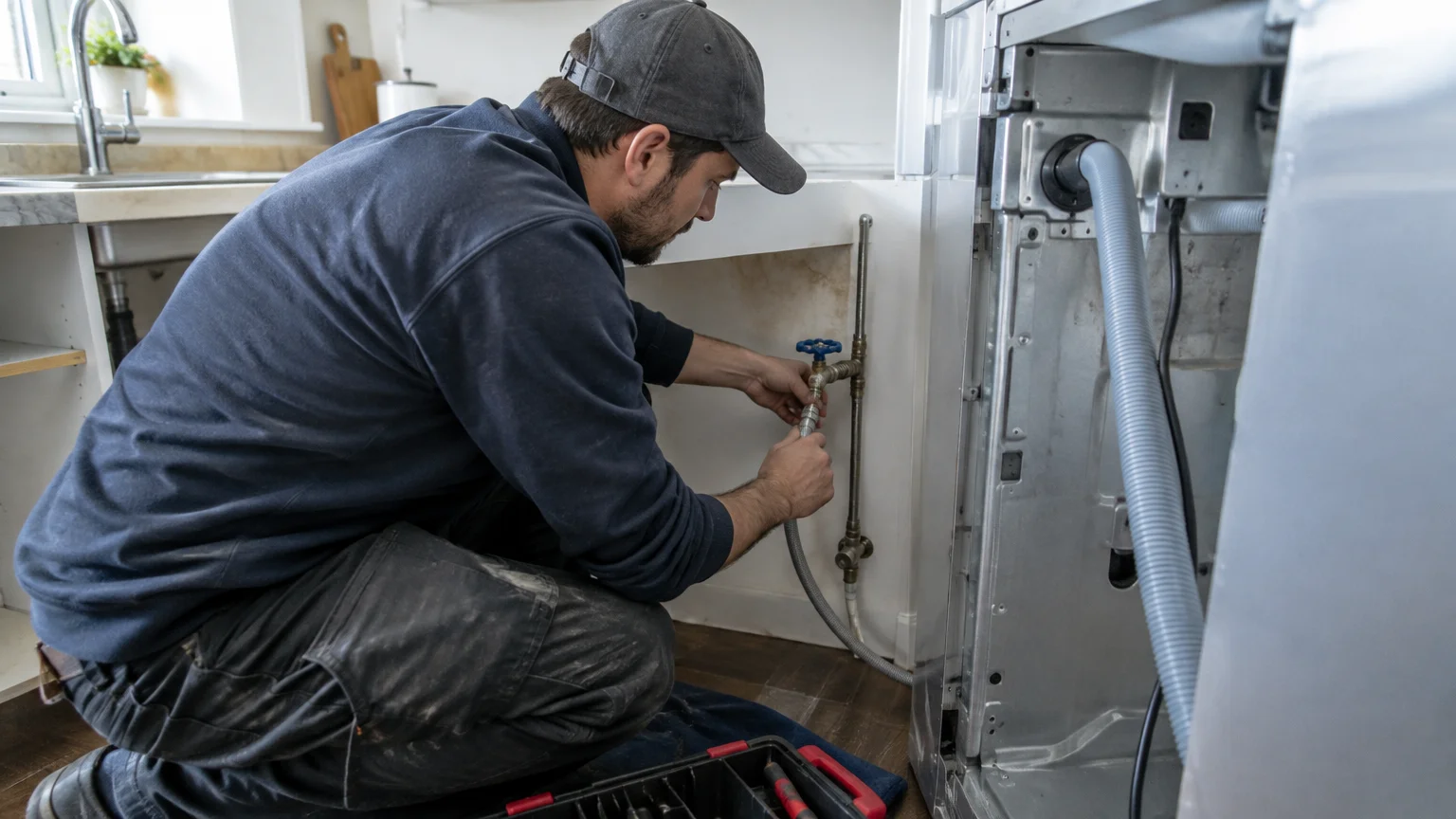
A homeowner can clear nearby items, open cabinet doors, and find the owner’s manual. They should not disconnect a gas line or unfamiliar electrical connection without qualified help. Water should also be shut off before a connected appliance moves, using the proper shutoff point.
Preventing damage to floors, cabinets, walls, and utility lines
Appliance crews may use moving blankets, straps, boards, and appliance dollies. These tools help spread the weight and protect finished surfaces. The route should be measured before the appliance moves. Doors may need to come off, but only when this is safe and practical.
The safest plan may be to have a qualified tradesperson disconnect the appliance first. A removal team can then move it without pulling on pipes or wires. This two-step plan helps during kitchen renovations, rental repairs, and property cleanouts.
When Is Professional Appliance Removal Important for a Property Turnover?
Professional appliance removal matters during a property turnover when old units delay cleaning, repairs, inspections, or a new tenant’s move-in. It can also help owners prepare listings, renovations, and inherited properties where several unwanted appliances remain.
Preparing rentals, listings, renovations, and inherited properties
Landlords may find broken washers or dryers after a tenant leaves. Sellers may replace an old refrigerator before listing a home. Renovation teams may need a clear kitchen before changing cabinets and floors. Families handling an inherited property may face appliances that are too heavy to move alone.
In each case, timing matters. The item may block a work area or make the property look unfinished. Removing it early can help cleaners, contractors, and property managers reach the space. It also keeps the owner from storing a bulky appliance while waiting for a later disposal plan.
How removal supports a cleaner, more usable space
A cleared space is easier to sweep, inspect, repair, and measure. It may reveal water damage behind a washer or wall damage behind a refrigerator. Early removal gives the owner time to fix floors or cabinets before the space is used again.
York Junk Removal helps property owners plan appliance pickup around project needs. The owner should share the appliance type, location, access route, and known connections. Clear details help the removal team prepare and avoid surprises at the property.
How Can You Decide Whether Professional Large Appliance Removal Is Worth It?
Professional large appliance removal is usually worth considering when safety, access, timing, or disposal rules make a do-it-yourself move hard. A homeowner does not need professional help for every appliance. Simple cleaning and basic preparation may be safe, but lifting, disconnecting, and disposal can need trained support.
Questions to ask before moving an appliance yourself
Before starting, the owner should ask:
- Can the appliance move without lifting beyond the owner’s safe ability?
- Is the path clear, level, dry, and wide enough?
- Does the appliance connect to gas, water, electricity, or a drain?
- Could it contain refrigerant, oil, batteries, or other controlled parts?
- Is there a confirmed destination that accepts this appliance type?
If any safety answer is unclear, stopping is the better choice. A homeowner can remove loose contents and clear the area. They should not risk a back injury, damaged floor, or utility leak to avoid arranging help.
What to expect when arranging a local removal service
A local removal service will need basic details before pickup. The owner should explain the appliance type, location, access conditions, and whether it is built in or connected. Photos may help the team understand tight spaces, stairs, gates, or unusual access.
The final service details should be confirmed before the appointment. Cost can vary with appliance size, access, condition, urgency, and disposal needs, so the final cost is confirmed on a quote. York Junk Removal can help York customers choose a practical plan for appliance removal and disposal.
Key Takeaways
- Heavy or awkward appliances can create injury and property risks.
- Refrigerators may need special handling because of refrigerant and cooling parts.
- Built-in appliances should be disconnected carefully before removal.
- Multiple appliances are often easier to plan as one organized pickup.
- Local rules may affect appliance recycling and disposal.
Frequently Asked Questions
Is appliance removal available near me?
Stores, utilities, local programs, and removal services may provide appliance collection under their own rules. Availability can change, and programs may have conditions about item type, location, or timing. Owners should confirm current pickup requirements directly. A private removal service will confirm its pickup details before work begins.
How can someone get rid of an old refrigerator?
An owner can check whether a local appliance facility, retailer program, or removal service accepts the refrigerator. Food and loose shelves should be removed first. The unit should not go with regular trash unless local guidance clearly allows it. Cooling parts may need special handling before recycling.
Can homeowners remove a washer and dryer themselves?
Homeowners can often clean the units and remove loose items themselves. Moving them is different. Water, vents, power, stairs, and tight doors can create risks. If the route is difficult or the connections are unclear, professional help is safer than forcing the appliances through the home.
What happens to old appliances after pickup?
The next step depends on the appliance’s condition and materials. Some units may be reused. Others may be separated for metal, plastic, glass, or electronic recycling. Refrigerators and similar cooling appliances may need special processing. The final destination should follow local facility rules.
What should an owner tell a removal company?
The owner should share the appliance type, size, location, condition, and access route. Stairs, narrow doors, gates, tight parking, and built-in fittings are important details. The owner should also mention water, gas, electrical, or refrigerant concerns so the team can plan the safest next step.
Conclusion
Large appliances are not always simple household items. Weight, access, utility connections, refrigerant, and local disposal rules can affect the job. Homeowners may handle cleaning and basic preparation, but difficult lifting and special disposal deserve more care.
When a refrigerator, washer, dryer, stove, or dishwasher is unsafe to move alone, professional large appliance removal can make the project easier to manage. Contact us to arrange appliance removal with York Junk Removal.